
Queer and Trans Fashion Brands: Resistance and Revolution in the 21st Century
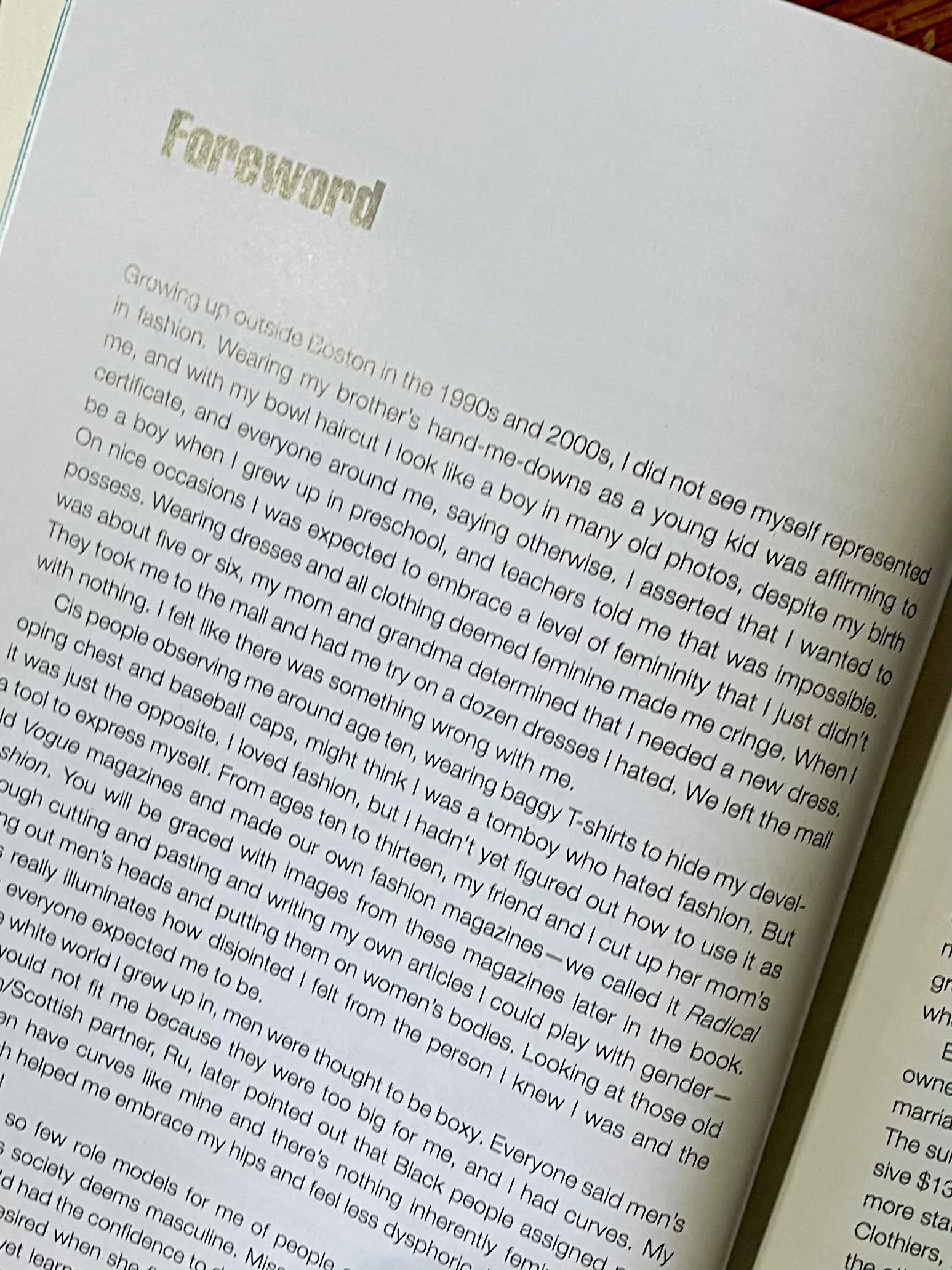
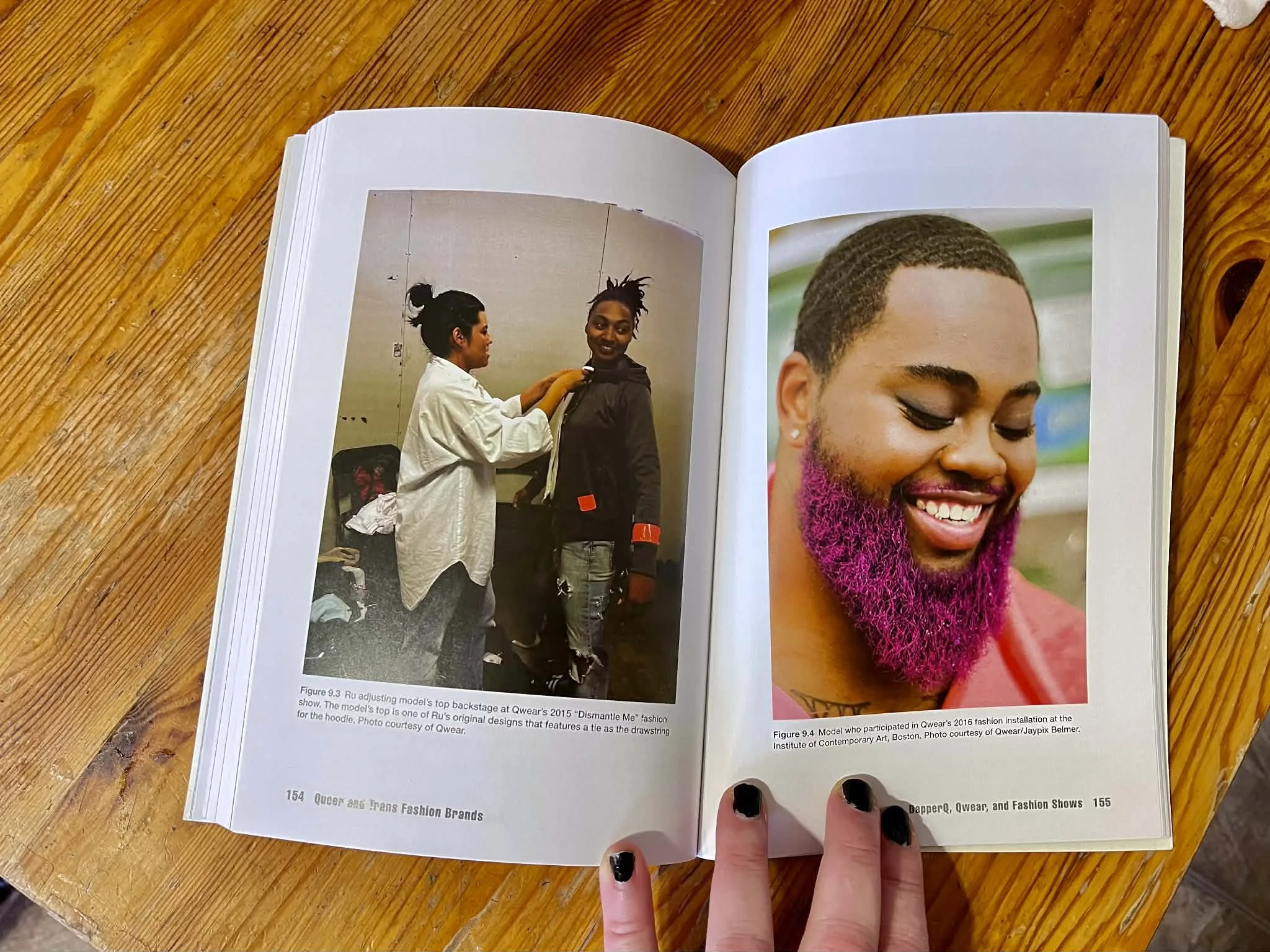
It was an honor for Qwear to contribute to Queer and Trans Fashion Brands: Resistance and Revolution in the 21st Century by Kelly L. Reddy-Best, (Bloomsbury Press) and to be included alongside other fashion publications and projects that shaped queer self-expression, including Rebirth Garments, gc2b, TomboyX, Strapping Sacramento, Dapper Boi, FLAVNT Streetwear, TransGuy Supply, Beefcake Swimwear and more.
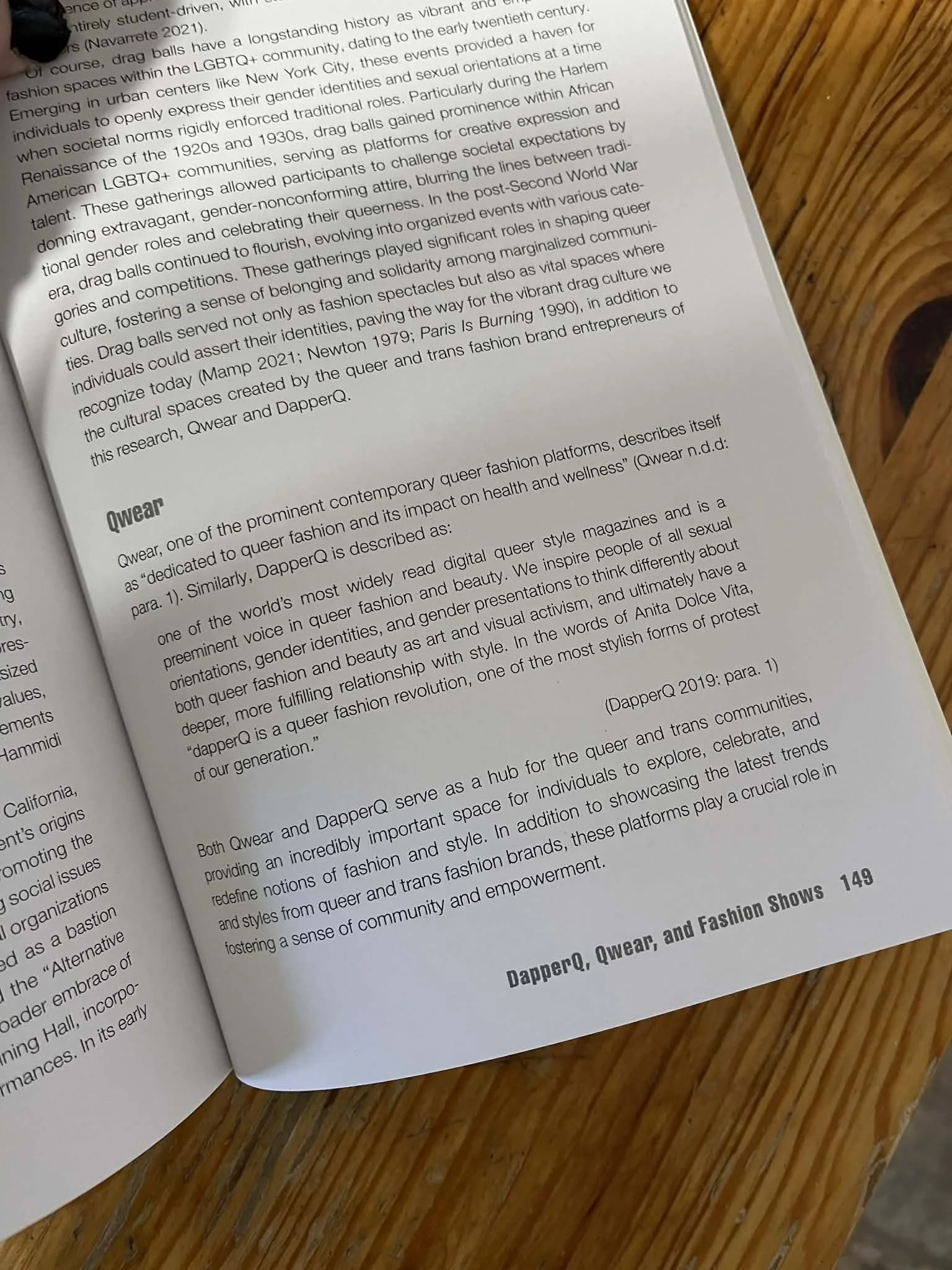
Qwear’s founder, Sonny Oram, frames queer fashion not as trend or niche, but as lived infrastructure developed in response to exclusion, danger, and unmet needs. He shares the story of growing up to found Qwear and establishes queer fashion as healthcare: a practice shaped by real bodies, real conditions, and collective problem-solving.
Author Kelly L. Reddy-Best says:
“Engaging with Qwear’s history made clear how community-built platforms actively shape fashion knowledge, visibility, and survival in ways mainstream fashion histories often overlook.
“I hope the book sparks conversations about how queer and trans fashion brands are not just making clothes but also creating spaces of resistance, community, and love in the 21st century. Centering these brands challenges traditional fashion studies to rethink value, labor, and innovation beyond profit and trend cycles, highlighting fashion as a form of social and political revolution while also grappling with the complicated ways queer creativity both resists and is shaped by capitalist structures.”
The book’s approach aligns closely with Qwear’s mission to document queer fashion as lived experience rather than abstraction. The brands featured are presented not as market innovations alone, but as responses to gaps left by mainstream fashion systems, including binary sizing, inaccessible garments, and hostile retail environments.
The publication of Queer and Trans Fashion Brands represents a meaningful step toward preserving queer and trans fashion history within the historical record. Qwear remains committed to continuing this work—amplifying voices, preserving archives, and supporting fashion as a site of care, authorship, and cultural memory.
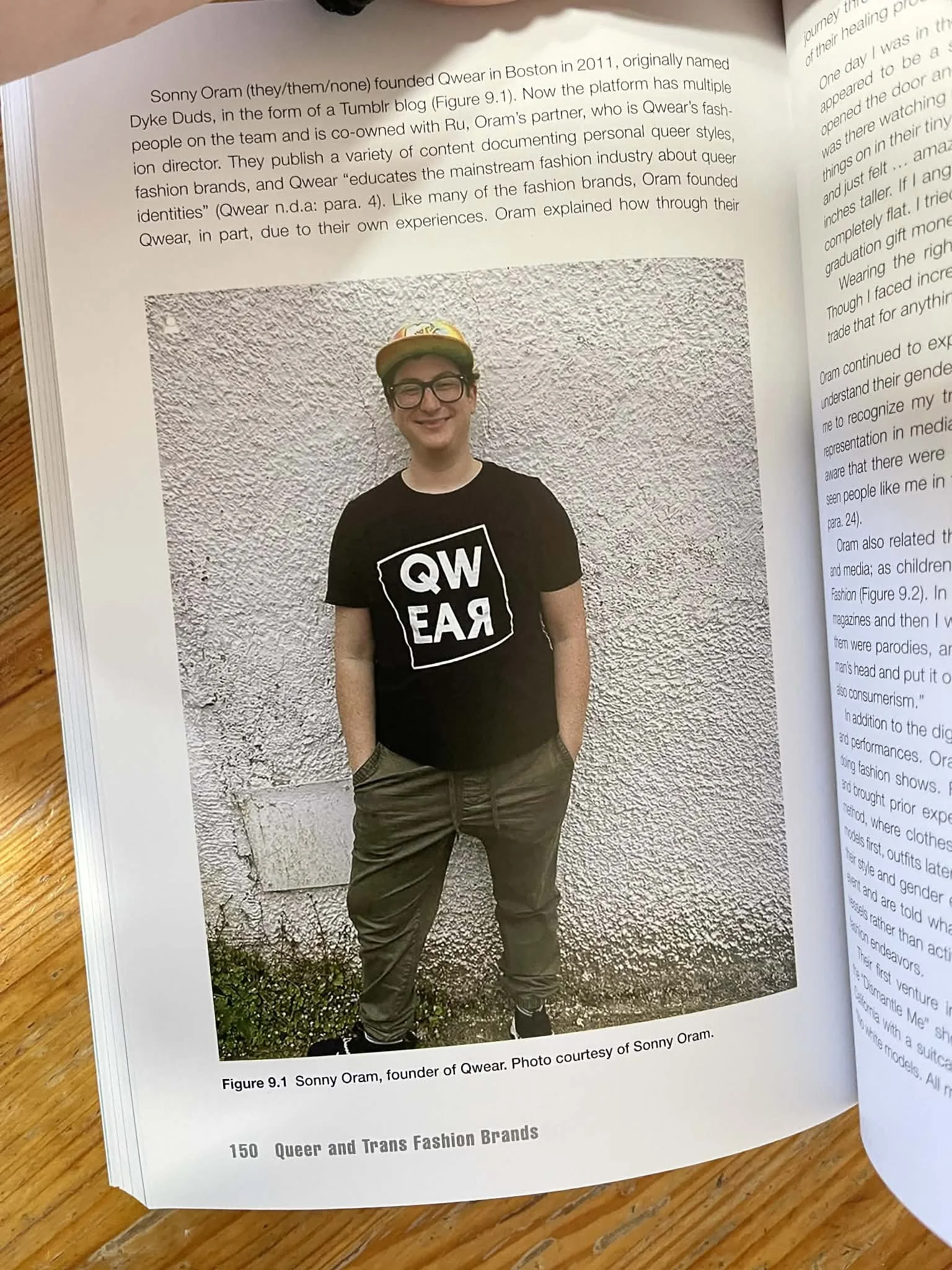
Enjoy an excerpt from the Foreward:
Growing up outside Boston in the 1990s and 2000s, I did not see myself represented in fashion. Wearing my brother’s hand-me-downs as a young kid was affirming to me, and with my bowl haircut I look like a boy in many old photos, despite my birth certificate, and everyone around me, saying otherwise. I asserted that I wanted to be a boy when I grew up in preschool, and teachers told me that was impossible. On nice occasions I was expected to embrace a level of femininity that I just didn’t possess. Wearing dresses and all clothing deemed feminine made me cringe. When I was about five or six, my mom and grandma determined that I needed a new dress. They took me to the mall and had me try on a dozen dresses I hated. We left the mall with nothing. I felt like there was something wrong with me.
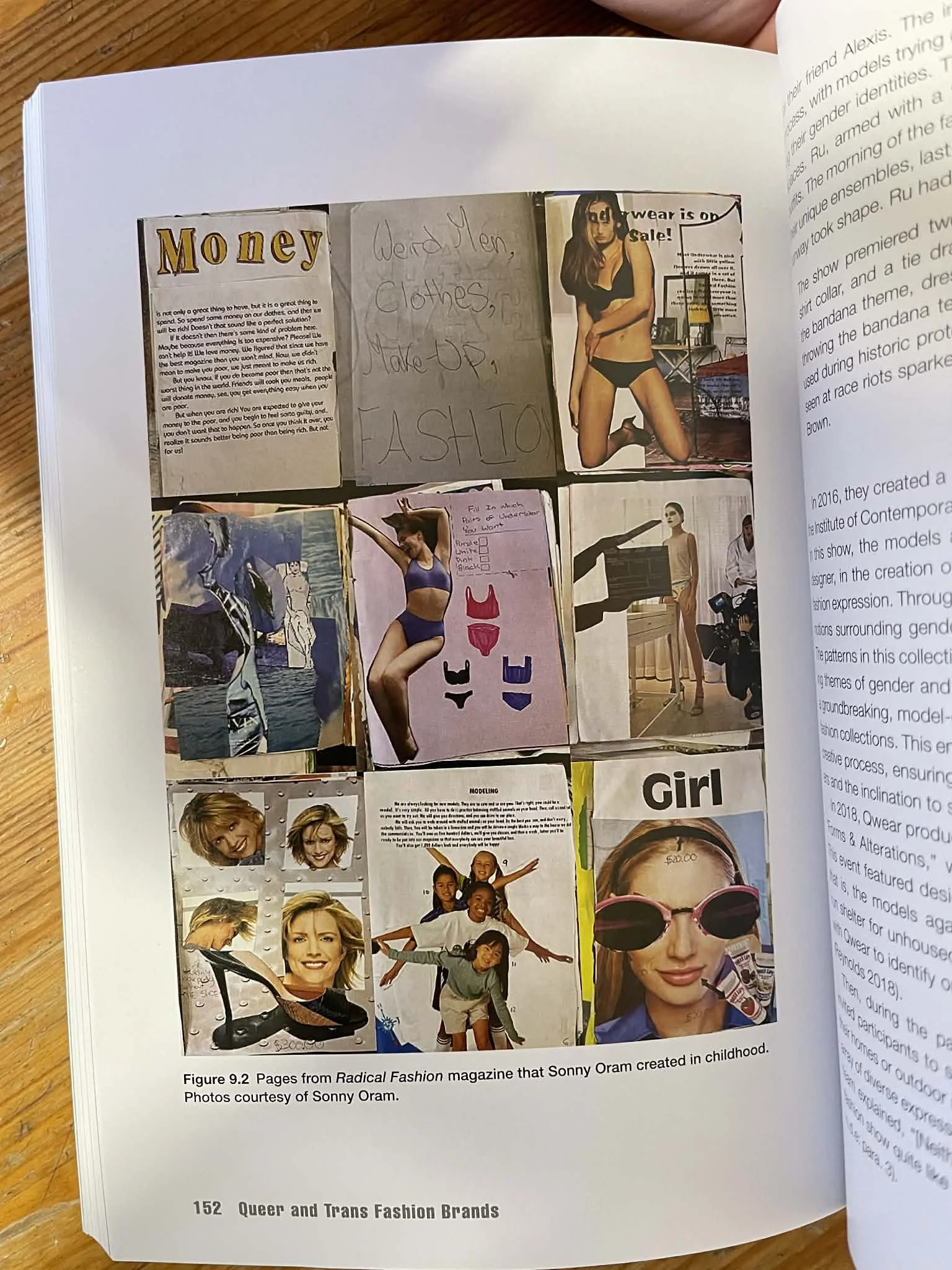
Cis people observing me around age ten, wearing baggy T-shirts to hide my developing chest and baseball caps, might think I was a tomboy who hated fashion. But it was just the opposite. I loved fashion, but I hadn’t yet figured out how to use it as a tool to express myself. From ages ten to thirteen, my friend and I cut up her mom’s old Vogue magazines and made our own fashion magazines—we called it Radical Fashion. You will be graced with images from these magazines later in the book. Through cutting and pasting and writing my own articles I could play with gender—cutting out men’s heads and putting them on women’s bodies. Looking at those old pages really illuminates how disjointed I felt from the person I knew I was and the person everyone expected me to be.
In the white world I grew up in, men were thought to be boxy. Everyone said men’s clothes would not fit me because they were too big for me, and I had curves. My Trinidadian/Scottish partner, Ru, later pointed out that Black people assigned male at birth often have curves like mine and there’s nothing inherently feminine about curves, which helped me embrace my hips and feel less dysphoric. If only I’d known Ru back then!
There were so few role models for me of people assigned female at birth who dressed in ways society deems masculine. Missy Elliot was the best dresser of the time, and I wish I’d had the confidence to dress more like her. Ellen DeGeneres’s style left much to be desired when she first came out on her sitcom in 1997—it seemed her stylists hadn’t yet learned how to dress a non-femme woman. The L Word, in 2004, introduced one non-femme character—Shane—whose greasy hair, androgynous look, and baggy clothes were liberating for many but her style did not offer much for my clean-cut aesthetic.
Share this article
Qwear is an independent platform that empowers LGBTQIA+ individuals to explore their personal style as a pathway to greater self-confidence and self-expression.
We’re able to do this work thanks to support from our amazing community. If you love what we do, please consider joining us on Patreon!
Support Us on Patreon